All posts by David Stevenson

Crucifixition- The Witness of Non-Christian History

The Witness of Non-Christian History

However, those who were much closer to the historical situation than Mohammed (who was born in a.d. 571) reported that Jesus died by crucifixion. These witnesses include non-Christian historians who had no motive to fabricate Christ’s death. For example, the Roman historian, Tacitus (who was born in a.d 55), wrote in his Annals (15:44) an explanation of how Nero, the emperor (who died in a.d 68) blamed Christians for the great fire of Rome in order to deflect rumors that he had started the blaze. In this passage Tacitus alludes to a fact which no one disputed: Christ had been crucified under Pontius Pilate:
All human efforts . . . of the emperor, and the propitiations of the gods, did not banish the sinister belief that the conflagration was the result of an order. Consequently, to get rid of the report, Nero fastened the guilt and inflicted the most exquisite tortures on a class hated for their abominations, called Christians by the populace. Christus, from whom the name had its origin, suffered the extreme penalty during the reign of Tiberius at the hands of one of our procurators, Pontius Pilatus , and a most mischievous superstition, thus checked for the moment, again broke out not only in Judea, the first source of the evil, but even in Rome, where all things hideous and shameful from every part of the world find their center and become popular. [4]

It was common and undisputed knowledge in the second half of the first century that Jesus Christ had been crucified. If there were any question that he had died in this way, it would have been eagerly disputed wherever Christians preached. But it wasn’t. The fact of his death by crucifixion was not questioned.

If the death of Jesus was a myth, it had to be created overnight, since within weeks Christians were preaching the saving power of Christ’s suffering and death. Even more significant, it was being preached in Jerusalemthe very city which had the greatest interest in making sure the error was stopped. As far as the Jewish leaders were concerned, this new religion was a distortion of the Jewish faith, and, in fact, was blasphemy, since Christians claimed that Jesus was himself the Son of God (Mark 14:61-64). “We have a law,” the Jewish leaders said to Pilate, “and according to that law he ought to die because he has made himself the Son of God” (John 19:7).

The fact is that Christians openly based their faith on the fact that Jesus was publicly tried, condemned, executed, and raised from the dead. They spoke this way within weeks after these events, when thousands of people who opposed this faith could have proved it wrong, if Jesus had not died. They could have gone to Pilate the governor or Herod the king or the Jewish Council or the soldiers or other witnesses of the crucifixion and gotten proof that he had not been condemned or crucified the way Christians said he was. But, in fact, no one did that. Everyone in Jerusalem knew that Jesus had been crucified, and many had watched him die. The resurrection was disputed, but not the crucifixion.

The early Christians were keenly aware that eyewitnesses were crucial in verifying their claims about the death and resurrection of Jesus. Their earliest writer, the apostle Paul, who was a contemporary of Jesus, said, ” Christ died for our sins in accordance with the Scriptures. . . . he was buried . . . he was raised on the third day . . . Then he appeared to more than five hundred brothers at one time, most of whom are still alive” (1 Corinthians 15:3-6). Why did Paul say “most of whom are still alive”? Because he was not afraid to have his claims put to the test. He knew they could be verified by eyewitnesses. In other words, Christianity was spreading during the very decades when eyewitnesses could have most easily proved it false. But the basic claims stood the test. The events had happened.

Moreover why would a group of Jews (for all the first Christians were Jews by birth) fabricate the death of Christ? The Christians had nothing to gain from creating the story of a crucified Messiah. It made the spread of Christianity almost impossible from a natural viewpoint. Crucifixion was an obscene form of torture and execution reserved for despised criminals. Most people, hearing the Christian message that Jesus Christ was the divine Son of God who died by crucifixion, thought it was ludicrous. One of the earliest first-century Christian preachers said, ” We preach Christ crucified, a stumbling block to Jews and folly to Gentiles [that is, non-Jews]” (1 Corinthians 1:23 ). It was not to the advantage of Christians to concoct a crucified Messiah. It made their life and mission much harder.

It was absolutely astonishing to the Roman world after the death of Jesus that Christians were willing to be tortured for faith in a convicted and crucified criminal. If this were a self-created myth, it was suicidal. In his History of Christian Missions , Stephen Neil wrote, “Christians under the Roman Empire had no legal right to existence, and were liable to the utmost stringency of the law. . . . Every Christian knew that sooner or later he might have to testify to his faith at the cost of his life.” [5] All of this because they believed that the crucifixion and resurrection of Jesus Christ was the most important event in the history of the world. The foolishness of the claim was almost insurmountable. And the Christians didn’t try to water it down.

https://www.desiringgod.org/articles/historical-evidence-for-the-resurrection

https://strangenotions.com/an-atheist-historian-examines-the-evidence-for-jesus-part-1-of-2/

https://strangenotions.com/an-atheist-historian-examines-the-evidence-for-jesus-part-2-of-2/

dance

Dance is mentioned on many occasions in Scripture. The first appearance of God’s people dancing as an act of worship is found in Exodus 15:20: “Miriam the prophetess, Aaron’s sister, took a tambourine in her hand, and all the women followed her, with tambourines and dancing.” This joyful dance to the Lord, led by Miriam, followed Israel’s crossing of the Red Sea and celebrated Israel’s newfound freedom from slavery.

Other instances of dancing in the Bible Include 2 Samuel 6:16, which has David “leaping and dancing before the LORD.” Also, the Amalekites danced in celebration after plundering Judah and Philistia (1 Samuel 30:16); theirs was a short-lived dance, however, as David and his men soon defeated them (verses 17-20).

The Psalms offer a unique look at dance as an act of worship. In Psalm 30:11, the psalmist says, “You turned my wailing into dancing.” Psalm 149:3 encourages the use of dancing to worship God: “Let them praise his name with dancing!” Likewise, Psalm 150:4 urges, “Praise him with tambourine and dancing!” just like Miriam.

Davidic Covenant

Question: “What is the Davidic covenant?”

Answer: The Davidic Covenant refers to God’s promises to David through Nathan the prophet and is found in 2 Samuel 7 and later summarized in 1 Chronicles 17:11″14 and 2 Chronicles 6:16. This is an unconditional covenant made between God and David through which God promises David and Israel that the Messiah (Jesus Christ) would come from the lineage of David and the tribe of Judah and would establish a kingdom that would endure forever. The Davidic Covenant is unconditional because God does not place any conditions of obedience upon its fulfillment. The surety of the promises made rests solely on God’s faithfulness and does not depend at all on David or Israel’s obedience.

The Davidic Covenant centers on several key promises that are made to David. First, God reaffirms the promise of the land that He made in the first two covenants with Israel (the Abrahamic and Mosaic Covenants). This promise is seen in 2 Samuel 7:10, “I will provide a place for my people Israel and will plant them so that they can have a home of their own and no longer be disturbed. Wicked people will not oppress them anymore.” God then promises that David’s son will succeed him as king of Israel and that this son (Solomon) would build the temple. This promise is seen in 2 Samuel 7:12″13, ” I will raise up your offspring to succeed you, your own flesh and blood, and I will establish his kingdom. He is the one who will build a house for my Name.”

But then the promise continues and expands: “I will establish the throne of his kingdom forever” (verse 13), and “Your house and your kingdom will endure forever before me; your throne will be established forever” (verse 16). What began as a promise that David’s son Solomon would be blessed and build the temple turns into something different”the promise of an everlasting kingdom. Another Son of David would rule forever and build a lasting House. This is a reference to the Messiah, Jesus Christ, called the Son of David in Matthew 21:9.

The promise that David’s “house,” “kingdom,” and “throne” will be established forever is significant because it shows that the Messiah will come from the lineage of David and that He will establish a kingdom from which He will reign. The covenant is summarized by the words “house,” promising a dynasty in the lineage of David; “kingdom,” referring to a people who are governed by a king; “throne,” emphasizing the authority of the king’s rule; and “forever,” emphasizing the eternal and unconditional nature of this promise to David and Israel.

Other references to the Davidic Covenant are found in Jeremiah 23:5; 30:9; Isaiah 9:7; 11:1; Luke 1:32, 69; Acts 13:34; and Revelation 3:7.

Davidic throne

When the Son of Man comes in His glory, and all the holy angels with Him, then He will sit on the throne of His glory’ (Mat 25:31). ‘Then the King will say to those on His right hand, Come, you blessed of My Father, inherit the kingdom prepared for you from the foundation of the world’ (Mat 25:34). At that time Christ will sit on the Davidic throne and it is the Lord Jesus Christ who will establish the kingdom on earth ” it will not be established by Israel, the Church or various church denominations. The Messianic kingdom does not already exist; believers will only inherit the kingdom when Christ returns to the earth. Then the Lord will restore the kingdom to Israel (cf. Acts 1:6).

Extraordinary Evidence About Jesus in the Dead Sea Scrolls

Extraordinary Evidence About Jesus in the Dead Sea Scrolls

If someone had asked a minister in 1947 to prove that the original Hebrew Scriptures from the Old Testament were reliably copied without error throughout the last two thousand years, he might have had some difficulty in providing an answer. The oldest Old Testament manuscript used by the King James translators was dated approximately A.D. 1100. Obviously, that old manuscript from A.D. 1100 was a copy of a copy of a copy, etc. for over two thousand years. How could we be sure that the text in the A.D. 1100 copy of the Scriptures was identical with the original text as given to the writers by God and inspired by Him? However, an extraordinary discovery occurred in the turbulent year before Israel became a nation. A Bedouin Arab found a cave in Qumran near the Dead Sea which ultimately yielded over a thousand priceless manuscripts dating back before A.D. 68, when the Roman legions destroyed the Qumran village during the Jewish war against Rome.

An Arab shepherd boy discovered the greatest archeological finds in history in 1947. When the ancient Hebrew scrolls from these caves were examined by scholars they found that this Qumran site contained a library with hundreds of precious texts of both biblical and secular manuscripts that dated back before the destruction of the Second Temple and the death of Jesus Christ. Once the Bedouins recognized the value of the scrolls they began searching for additional documents in every valley and cave near the Dead Sea. The most incredible discovery was the immense library of biblical manuscripts in Cave Four at Qumran that contained every single book of the Old Testament with the exception of the Book of Esther. Multiple copies of several biblical texts such as Genesis, Deuteronomy and Isaiah were found in Cave Four. Scholars were able to reach back a further two thousand years in time to examine biblical texts that had lain undisturbed in the desert caves during all of the intervening centuries. The scholars discovered that the Hebrew manuscript copies of the most authoritative Hebrew text, Textus Recepticus, used by the King James translators in 1611, were virtually identical to these ancient Dead Sea Scrolls. After carefully comparing the manuscripts they discovered that, aside from a tiny number of spelling variations, not a single word was altered from the original scrolls in the caves from the much copied A.D. 1100 manuscripts used by the Authorized King James Version translators in 1611. How could the Bible have been copied so accurately and faithfully over the many centuries without human error entering into the text? The answer is found in the overwhelming respect and fear of God that motivated Jewish and Christian scholars whose job was to faithfully copy the text of the Bible. In a later chapter dealing with the Hebrew Codes beneath the text of the Bible, I will share how the Masoretic scribes meticulously copied the text of the Scriptures over the centuries.
The Essenes were a Jewish community of ascetics that lived primarily in three communities: Qumran at the Dead Sea, the Essene Quarter of Jerusalem (Mount Zion), and Damascus. They appear to have existed from approximately 200 B.C. until the destruction of their communities in Jerusalem and Qumran by the Roman armies in A.D. 68. During the first century there were three significant Jewish religious communities: the Pharisees, the Sadducees, and the Essenes. The Essenes established their religious community near the shores of the Dead Sea. In their love for the Word of God they faithfully copied each Old Testament scroll in their Scriptorium in the village of Qumran. New evidence indicates that these men of God were aware of the new religious leader in Israel known as Jesus of Nazareth and the group of writings about Him known as the New Testament. The Christian historian Eusebius, who wrote around A.D. 300, believed that the Essenes were influenced in their beliefs by Christianity.

When the scrolls were first discovered, many Christian scholars naturally wondered if they might contain evidence about the new faith of Christianity. Despite overwhelming interest, the vast majority of scrolls were not translated for publication in the intervening forty-nine years. For almost fifty years, the hopes of Christian scholars were frustrated by the decision of the small group of original scroll scholars to withhold publication and release of a significant number of these precious scrolls. Some scholars speculated publicly that there might be evidence about Christ in the unpublished scrolls but the original scroll scholars vehemently denied these claims. While some scroll scholars had published part of their assigned texts, after forty-five years the team responsible for the huge number of scrolls discovered in Cave Four had published only twenty percent of the five hundred Dead Sea Scrolls in their possession.

Quotes from the New Testament in the Dead Sea Scrolls

Finally, after a public relations campaign demanded the release of the unpublished scrolls to other scholars, the last of the unpublished scrolls were released to the academic world. To the great joy and surprise of many scholars, the scrolls contain definite references to the New Testament and, most importantly, to Jesus of Nazareth. In the last few years several significant scrolls were released that shed new light on the New Testament and the life of Jesus. One of the most extraordinary of these scrolls released in 1991 actually referred directly to the crucifixion of Jesus Christ.

The Crucified Messiah Scroll

In 1991 the world was astonished to hear that one of the unpublished scrolls included incredible references to a “Messiah” who suffered crucifixion for the sins of men. The scroll was translated by Dr. Robert Eisenman, Professor of Middle East Religions of California State University. He declared, “The text is of the most far-reaching significance because it shows that whatever group was responsible for these writings was operating in the same general scriptural and Messianic framework of early Christianity.” Although the original scroll team still claimed that there was no evidence about early Christianity in the unpublished scrolls, this new scroll totally contradicted their statements. This single scroll is earth-shaking in its importance. As Dr. Norman Golb, Professor of Jewish History at the University of Chicago said, “It shows that contrary to what some of the editors said, there are lots of surprises in the scrolls, and this is one of them.”

This remarkable five-line scroll contained fascinating information about the death of the Messiah. It referred to “the Prophet Isaiah” and his Messianic prophecy (Chapter 53) that identified the Messiah as one who will suffer for the sins of his people. This scroll provides an amazing parallel to the New Testament revelation that the Messiah would first suffer death before He would ultimately return to rule the nations. Many scholars believed that the Jews during the first century of our era believed that, when he finally came, the Messiah would rule forever without dying. The exciting discovery of this scroll reveals that the Essene writer of this scroll understood the dual role of the Messiah as Christians did. This scroll identified the Messiah as the “Shoot of Jesse” (King David’s father) the “Branch of David,” and declared that he was “pierced” and “wounded.” The word “pierced” remind us of the Messianic prophecy in Psalms 22:16: “They pierced my hands and feet.” The prophet Jeremiah (23:5) said, “I will raise unto David a righteous branch.”

The scroll also describes the Messiah as a “leader of the community” who was “put to death.” This reference pointing clearly to the historical Jesus of Nazareth is creating shock waves for liberal scholarship that previously assumed that the Gospel account about Jesus was a myth. Jesus is the only one who ever claimed to be the Messiah who was crucified. The genealogies recorded in both Matthew and Luke’s Gospels, reveal that Jesus was the only one who could prove by the genealogical records kept in the Temple that He was the lineage of King David as the “Son of Jesse.” Since the tragic destruction of the Temple and its records in A.D. 70 it would be impossible for anyone else to ever prove their claim to be the Messiah based on their genealogical descent from King David. Additionally, the scroll identified the Messiah as “the sceptre” which probably refers to the Genesis 49:10 prophecy, “The sceptre shall not depart from Judah, nor a lawgiver from between his feet, until Shiloh come; and unto him shall the gathering of the people be.” This scroll confirms the historical truthfulness of the New Testament record about Jesus and His crucifixion. The evidence from the scroll suggests that the Jewish Essene writer acknowledged that Jesus of Nazareth was the “suffering Messiah” who died for the sins of His people.

The “Son of God” Scroll

Another fascinating scroll discovered in Cave Four known as 4Q246 refers to the hope of a future Messiah figure. This is another of the scrolls that was unpublished until recently. Amazingly, the text in this scroll refers to the Messiah as “the son of God” and the “son of the Most High.” These words are the exact wording recorded in the Gospel of Luke.

The Text of Scroll 4Q246 – the Son of God Scroll:

“He shall be called the son of God,
and they shall designate [call] him son of the Most High.
Like the appearance of comets, so shall be their kingdom.
For brief years they shall reign over the earth and shall trample on all;
one people shall trample on another and
one province on another until the people of God shall rise and all shall rest from the sword.”

Compare the words in the scroll 4Q246 text to the inspired words found in Luke 1:32 and 35: “He shall be great, and shall be called the Son of the Highest: and the Lord God shall give unto him the throne of his father David… And the angel answered and said unto her, The Holy Ghost shall come upon thee, and the power of the Highest shall overshadow thee: therefore also that holy thing which shall be born of thee shall be called the Son of God” (Luke 1:32-35).

Anyone comparing these two first century texts will be startled by the amazing similarity of concept and wording describing the Messianic leader. One of the great differences between Christian and Jewish conceptions of the promised Messiah revolves around His relationship to God. While the Jews believe the Messiah will be a great man, such as Moses, with a Divine mission, the Christians believe that the Bible teaches that the Messiah would be uniquely “the Son of God.” The Jewish view usually held that the concept of a “son of God” violated the primary truth of monotheism found in Deuteronomy 6:4 “Hear, O Israel: The Lord our God is one Lord.” The Christians believed that Jesus’ claim to be the Son of God was not a violation of Deuteronomy 6:4. Rather, Christians believe in the Trinity, the doctrine that the Father, the Son and the Holy Spirit are revealed in the Bible to be One God, revealed in three personalities. As Christians, we do not believe in three separate gods. Therefore, Christians understand the statements about Jesus as the Son of God to be in complete conformity to the truth of monotheism – there is only one God. It is fascinating in this regard to consider the presence of these statements in this first century Jewish text: “He shall be called the son of God, and they shall designate [call] him son of the Most High.”

The presence of these statements in the Dead Sea Scrolls suggests that some of the Essenes either accepted the Messianic claims of Jesus to be the Son of God or anticipated this concept. Either possibility opens up new areas for exploration. Another possibility that must be considered is this: Is it possible that this scroll 4Q246 is a direct quote from the writer hearing the words of the Gospel of Luke that was now widely circulating according to early Christian witnesses? Luke, the physician, claimed that he wrote the Gospel of Luke as an eyewitness of the events he personally observed. In Luke 1:1-3, he says: “Forasmuch as many have taken in hand to set forth in order a declaration of those things which are most surely believed among us, Even as they delivered them unto us, which from the beginning were eyewitnesses, and ministers of the word; It seemed good to me also, having had perfect understanding of all things from the very first, to write unto thee in order, most excellent Theophilus.”

The discovery of the virtually identical wording “the Son of God” from Luke 1:32 and 35 with the scroll found buried in a cave in A.D. 68 stands as a tremendous witness to the early existence and transmission of the Gospel records within thirty-five years of Christ. If the Gospels were written and distributed within thirty-five years of the events of the life of Jesus (as the Gospels claim) then they stand as the best eyewitness historical records we could ever hope to possess. It would be almost impossible to distribute the Gospel accounts to thousands of people in Israel within three and a half decades of the events unless they were true accounts. If the Gospel records were untrue, many witnesses would have stood up and denied their accuracy. However, the records of the first century reveal that no one denied the facts about the life, death, and resurrection of Jesus. In fact, all of these ancient historical records confirm the truth of the Gospels.

Other New Testament Quotes Identified in the Scrolls

In 1971, a Spanish biblical scholar named Jose O’Callaghan studied some of the small fragments of scrolls discovered in Cave Seven at Qumran. He was looking for correspondences between these fragments of Greek scrolls and the Septuagint, the Greek translation of the Hebrew Old Testament that was widely used by Jesus and the apostles.

These fragments are quite small containing only small portions of each verse. After almost two thousand years, the elements and insects have significantly damaged these manuscripts. In some cases only small fragments containing parts of a verse on three or four lines remain from an original scroll. It required considerable detective work to determine the precise text in these tiny fragments.

One day he carefully examined several small scroll fragments located in a photo page in The Discoveries of the Judean Desert of Jordan. To his great surprise O’Callaghan noticed that several did not fit any Old Testament text. These fragments were listed as “Fragments not identified.” To his amazement Dr. O’Callaghan found that these Greek language fragments bore an uncanny resemblance to several verses in the New Testament. He read the Greek words “beget” and a word that could be “Gennesaret,” a word for the Sea of Galilee. The fragment containing “Gennesaret” appears to be a quotation of the passage referring to the feeding of the five thousand found in Mark 6:52,53 which states: “For they considered not the miracle of the loaves: for their heart was hardened. And when they had passed over, they came into the land of Gennesaret, and drew to the shore.”

If these texts are actually portions of these Christian writings they would be the earliest New Testament texts ever discovered. The New York Times responded, “If O’Callaghan’s theory is accepted, it would prove that at least one of the Gospels, that of St. Mark, was written only a few years after the death of Jesus.” The Los Angeles Times headlined, “Nine New Testament fragments dated A.D. 50 to A.D. 100 have been discovered in a Dead Sea Cave.” It stated that “if validated, [they] constitute the most sensational biblical trove uncovered in recent times.”

Other Scroll Fragments and the New Testament

Dr. Jose O’Callaghan ultimately identified eight different scroll fragments from Cave Seven that appear to be quotes from New Testament passages. The scholarly magazine Bible Review ran a fascinating article on Dr. O’Callaghan, these scrolls, and their possible connection with the New Testament in an article in December, 1995.

The fragments appeared to O’Callaghan to be portions of the following verses from the Gospels and Paul’s Epistles:
“For the earth bringeth forth fruit of herself. . .” (Mark 4:28).
“And he saw them toiling in rowing; . . .” (Mark 6:48).
“And Jesus answering said unto them, Render to Caesar. . .” (Mark 12:17)
“And when they had eaten enough, they lightened the ship. . .” (Acts 27:38).
“And not only so, but we also joy in God through our Lord Jesus Christ. . .” (Romans 5:11-12).
“And without controversy great is the mystery of godliness. . .” (1 Timothy 3:16).
“For if any be a hearer of the word, and not a doer. . .” (James 1:23-24).

As one example of Dr. O’Callaghan’s study, he examined a small scroll fragment known as 7Q5 that contained only twenty Greek letters on five lines of text. Many of the thousands of scroll fragments that were successfully identified from the Qumran site are equally small. Another scroll scholar, Carsten Thiede, agrees with O’Callaghan that portions of the Mark 6:52,53 passage appears in this scroll fragment. While other scroll scholars disagree with the identification of this fragment as a verse from the New Testament they do admit that almost all of the scrolls found in Cave Seven were written in the period between 50 B.C. and A.D. 50, which is consistent with the time of the writing of the Gospel of Mark.

Naturally, as with other matters connected with the controversial Dead Sea Scrolls, many scholars disagreed with the conclusions of Dr. O’Callaghan. The debate still continues twenty years later. At this stage we cannot be certain that O’Callaghan’s conclusion is correct. More work needs to be done. However, the recent publication of the discovery of Scroll 4Q246 and its identical reference to “the Son of God” as found in Luke 1:32 and 35 provide strong support for the possibility that these fragments are related to these New Testament passages. In addition, I have great hopes that the new archeological exploration of recently detected caves at Qumran may provide new evidence including New Testament references. Many of these mysteries will be solved when the final four hundred unpublished scrolls are finally published in the next few years. The new dig at Qumran may also uncover additional scrolls that will help us understand more clearly the Messianic beliefs of this group of religious men and women who lived at this desert site during the time when Jesus walked the earth.

When we consider the total amount of evidence that confirms the biblical record about Jesus of Nazareth we can have confidence that we know more about the life and resurrection of Christ than we know about any other person in the ancient world. God has not left us in darkness concerning the truthfulness of the miracles, prophecies and teaching of His Son, Jesus Christ.

Dead Sea Scrolls

Your faith is worth more than gold
~ 1 Peter 1:7

Study of the Dead Sea Scrolls has increased the faith of Bible-believers. Why? Because they prove that the hand-copied texts that have come down from the Masoretic scribes are accurate.

The Dead Sea is the lowest place on earth – 400 metres below sea level.

The exceptionally dry climate meant that the hidden scrolls could better survive the ravages of time.

Printed Bibles have been in use for about 500 years. Prior to that, copies of the Scriptures were hand-written. Each Bible was a copy, made from a previous copy. No original texts were preserved. In fact, the oldest copy in existence, until the discovery of the Dead Sea Scrolls, dates back about 1,100 years. The question could always be asked: How can we know that errors did not occur in the copying?

The Dead Sea Scrolls, discovered in the years 1947 to 1956, in eleven caves near Qumran, have answered that question. The Scrolls can be positively dated. They are 1000 years older than previously used manuscripts — and yet the text shows no deviation.

The Masoretic scribes who made the copies kept a remarkably accurate record.

It is another proof that the Hebrew Bible is trustworthy. It is the Word of God, as delivered by Him and preserved by Him.

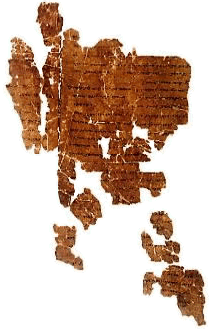
A fragment of the scroll of the book of Exodus dated to approximately 100 BC.

The text is Exodus 6:25-7:19 in palaeo-Hebrew script.

Dating the Dead Sea Scrolls

The Dead Sea Scrolls are noteworthy because they prove the integrity of the Hebrew Bible. What is significant is that the Scrolls can be positively dated to around 100 BC, which makes them a thousand years older than the oldest texts previously available.

How are the Scrolls dated?

  • Scholars are able to date the ancient Hebrew script, known as palaeo-Hebrew. There is no doubt about the period when this writing was in use.
  • Historical references in the non-biblical scrolls of the Essenes show that they were living in herodian times.
  • Archaeological evidence gives us positive dates for when the Essenes were living at Qumran.
  • Carbon-14 tests
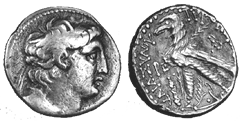
  • Coins found with the Scrolls can be definitely dated.Seleucid tetradrachms minted in Tyre date to about 120 BC. Shekel and half-shekel coins were minted from 125 BC onwards. They were the coins prescribed for the Temple poll tax. Roman coins from around 50 BC were among the hoard, and there were some coins that could be dated to around 10 BC.

Silver coins

These silver coins were part of a hoard of 561 shekel and half-shekel coins found in vessels under a doorway at Qumran.

What was found?

The Dead Sea Scrolls were found in the years 1947 to 1956 in eleven caves near Qumran on the northwest shore of the Dead Sea — the lowest place, and one of the driest places, on earth.

The remains of about 800 scrolls were discovered. Some were substantially intact, including copies of the book of Isaiah. However, most survived only as fragments and assembly was painstaking and difficult – rather like working on vast jigsaw puzzles with many of the pieces missing.

The Scrolls were from the library of the monastic Essenes – a Jewish sect in Israel. During the First Jewish Revolt from 66AD to 73AD, the Essenes hid their valuables and fled from the Roman army. The treasure was preserved for 1900 years.

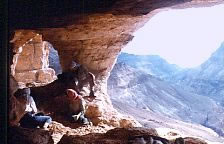
The Judean wilderness around the Dead Sea is riddled with caves and hiding places.

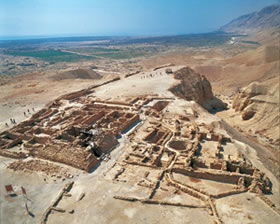
The settlement of the Essenes at Qumran was located above the gorge running from the mountains to the Dead Sea.

About 190 of the 800 scrolls were from every book of the Hebrew Bible, except the book of Esther. The most popular biblical books were Isaiah, Psalms, Deuteronomy and Genesis. The non-biblical manuscripts included hymns, commentaries, rules for communal life, military manuals and theological works.

Study of the Scrolls

At the time of the discovery of the Scrolls the area was controlled by Jordan. Seven scholars were assigned to assemble the fragments. Six were Catholic clerics. The seventh was an agnostic. Protestants and Jews were excluded.

It took until the late 1950’s to substantially complete the work of assembly. Then the team divided the 500 different texts among themselves for publication – an act of enormous scholarly pride and greed, because this was far more work than anyone could possibly have completed in a lifetime. Only one scholar ever published his entire assignment, but the work was so bad that an article correcting it is longer than his original publication. Over the next thirty years the team managed to publish less than twenty per cent of the texts.

Scholars in the 1950’s studying fragments of the Dead Sea Scrolls

There was great dissatisfaction from excluded scholars around the world, and the delays fuelled controversies and speculation that ran in the popular press in the 1990’s.

Israel had acquired a handful of scrolls by purchase in 1947, and others in 1954. They gained administration of the entire project when they defeated Jordan in the 1967 Six-Day War. However, Israel was unwilling to risk international criticism, so the scholars continued to guard their “right” to the hoard of texts. It was not until 1991, when various pressures, and the publication of computer reconstructed photographic transcripts of the Scrolls, made the entire collection generally available.

Today, anyone can purchase a copy of all the Scrolls and more than 50 international scholars – Catholic, Protestant, Jewish and secular – have been working on the project.

The mystery has gone out of the affair – and with it, public interest.

However, for the Bible-believer, we can say that the study of the Dead Sea Scrolls will give:

  • The knowledge that Christianity is grounded more deeply in Jewish thought than was supposed for many centuries.
  • Confirmation that the Hebrew Bible, used by Jews and Christians today, is the same as that quoted by Jesus.

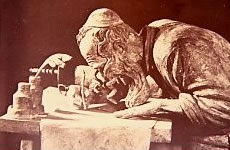
The ancient scribes

Before the introduction of printing, some 500 years ago, scrolls and books had to be copied by hand. Scribes worked at this task from the earliest days. Jewish scribes developed their traditions and practices from the time of Moses, through the Babylonian captivity, through the time of Jesus and into the Middle Ages when they were called Masoretes.

They were not allowed to write anything from memory. They took a ritual bath before starting and they could not be disturbed – even by the king. After copying, every word and letter had to be counted to check against the original. If they did not match then the copy was destroyed.

Hebrew scribes spent their lives copying the biblical texts

Scribes had to be strictly observant Jews and had to follow meticulous rules in their work.

No originals remain. The earliest copies that we have – prior to the discovery of the Dead Sea Scrolls – were copies of copies of copies. They are the Cairo Codex (895 AD), the St Petersburg Codex (916 AD), the Aleppo Codex (929 AD) and the British Museum Codex (950 AD).

The Dead Sea Scrolls pre-date these texts by nearly one thousand years, and prove how remarkably accurate the scribes have been through the ages.

The archaeological dig at Qumran.

The Dead Sea Scrolls were found in caves around the site of this monastic settlement of the Essenes. Clay inkwells and reed pens were found in the ruins.

Controversies surrounding the Dead Sea Scrolls

The complicated job of piecing the scroll fragments together, and scholarly pride in not sharing their work, led to a delay of forty years in publishing the substantial findings of the Dead Sea Scrolls. In the late 1980’s speculation began to grow that the Catholic scholars who were controlling the assignment were attempting to hide evidence that would discredit Christianity.

The dramatic story of the finding of the Scrolls, and the secrecy and mystery surrounding the study of them, gave fuel to the popular press. Wild ideas were put forward as to whether the Scrolls were medieval forgeries or whether Jesus, Paul and John the Baptist were identifiable in the writings. Others speculated that forgotten gospels, or omitted biblical texts, had been found and some believers worried that perhaps their faith in the Bible might be undermined.

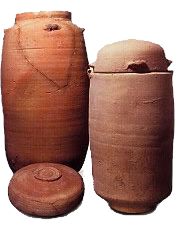
Pottery jars of a type found nowhere else.

These unique jars were found in the excavations at Qumran and also in the caves where the Dead Sea Scrolls were hidden.

Cashing in on the public interest, several authors published books in the early 1990’s containing contrived stories questioning the New Testament account and claiming the Dead Sea Scrolls as evidence for their theories.

Without addressing all the suppositions of these now discredited writers and theologians, it can be stated that their ideas are in complete disagreement with those of today’s scholars.

Christians need not fear attacks upon their faith. It rests on a solid foundation.

In just one example, Barbara Thiering composed a bizarre story that Jesus survived the crucifixion, married twice and died in Rome. She labelled Him the ‘Wicked Priest’ and the ‘Liar.’ She said that John the Baptist was the ‘Teacher of Righteousness.’ However, the scroll mentioning the ‘Teacher of Righteousness’ is dated at least 100 years earlier than the time of Jesus. The scroll describes the ‘Wicked Priest’ as a ruler of Israel, corrupted by wealth and power. No Jewish, Christian or non-affiliated scholar has ever claimed that Jesus was the ruler of Israel or was corrupted by wealth!

To give another example, the Essenes were separatists. Jesus was not. And neither was John the Baptist. They did not lock themselves away from the world but mixed with ordinary people, including those that their society abhorred, like prostitutes and tax-collectors. Jesus, John the Baptist and the apostles could not have been associated with the separatist Essene sect.

Christians need not fear attacks upon their faith. It rests on a solid foundation.

New Testament copies

We have 4,969 handwritten copies of portions of the New Testament. Some fragments can be dated to as early as 125 AD.

By comparison, there are only 643 copies of Homer’s Iliad, 49 copies of Aristotle’s Works, 20 copies of Livy’s History of Rome, and 10 copies of Caesar’s Gallic Wars. Liberal scholars try to discredit the Bible, but they accept these other works, with far fewer copies, as authoritative. They discredit themselves with such inconsistency.

No other writings from the past can be compared with the Bible in terms of overwhelming evidence”

While manuscript copies of Caesar’s Gallic Wars and Aristotle’s Works are about 1000 years old, there are New Testament copies, like the John Rylands Fragment, the Papyrus Bodmer II, the Codex Sinaiticus and the Codex Vaticanus that can be dated to between 1660 and 1890 years ago. No other writings from the past can be compared with the Bible in terms of overwhelming evidence.

God has preserved His Word for us. Our faith rests on a solid foundation.

Jesus Did Exist

1. Non Christian Sources

[Links to English translations provided in each case]

  • Mara bar Serapion – in a letter generally dated to the first century (c. 73 A.D.) – speaks of the Jews executing their “wise king” shortly before their kingdom was abolished, though he lives on in his teaching. This letter doesn’t mention Jesus by name, but most scholars agree no other Jewish figure from the period except Jesus fits the ‘identikit’ of king, teacher and martyr.
  • Jewish historian Josephus (c 37-100 A.D.) mentions Jesus twice in his Jewish Antiquities. The uncontroversial reference (20.200) tells how a Jewish high priest, Ananus, organised the death of James, whom he describes as the brother of Jesus, “called the Christ”.
  • The more controversial reference as it comes to us from Josephus in the existing text today (18.63-64) appears to have been embellished at some point by a copyist (likely a well-meaning but misguided Christian). Historians disagree about reconstructing the original underlying text. The reference to his resurrection is especially disputed. But a majority agree that Josephus at least reports that Jesus had a reputation as a wise man, wonder-worker and teacher; was called the Christ, and was crucified under Pilate; further, that members of the “tribe of Christians” are named after him.
  • Rome’s greatest historian, Tacitus (56-120 A.D., in his Annals (15.44) records how Emperor Nero blamed the Christians for the fire of Rome. Tacitus makes clear his revulsion of Christianity, but nevertheless confirms that the movement got its name from Christ, a man who was executed during the reign of Tiberius by the governor Pontius Pilate, and indicates that this superstitious devotion to Christ (as he sees it) continued after his death, spreading to Rome.
  • Pliny the Younger, a Roman administrator, writes c. 110 A.D. in a letter to Emperor Trajan that (despite official persecution) Christians continued to meet and sing hymns to Christ as to a god.
  • Another Roman historian, Suetonius, in Life of Claudius 25.4 (c. 120 A.D.) reports that Emperor Claudius expelled the Jews from Rome because of a riot caused at instigation of “Chrestus”. Most experts think is likely a confusion for the name of “Christ”, and it is certainly consistent with information from Acts 18:2.
  • The Jewish Talmud (dating 100-200 A.D.) reports (baraitha Sanhedrin 43a) that Yeshu (= Jesus) was hanged around Passover for practising sorcery (most likely a reference to his exorcisms).
  • Lucian of Samosata (115-200 A.D.) in his The Death of Perigrinus (11-13) mocks the founder of the Christian movement as a Palestinian man and “crucified sophist”, who persuaded his followers they were all brothers and to deny the Greek gods.

There are a couple of other secular references to Jesus’ existence dating from the 1st and 2nd centuries A.D., but together from these early non-Christian sources we can determine the following details were known and reported of Jesus:

  • his existence in Palestine during the reign of Emperor Tiberius;
  • his activity as a teacher/wise man;
  • his reputation as some sort of wonder worker;
  • the attribution by some to him of the title “Christ” (= Messiah in Hebrew);
  • the time and manner of his crucifixion near Passover;
  • the involvement in this execution of the Roman governor Pilate;
  • the flourishing of a movement that worshipped him decades after; and
  • that he had a brother named James.

2. Christian Sources

Of course, this is all consistent with the Bible. And far more information about Jesus’ life can be obtained from the sources within the New Testament, especially the canonical Gospels – Matthew, Mark, Luke, John. These are now quite widely considered to fit into the genre of Graceo-Roman biography. In addition, the Epistles of Paul (dating even earlier) and James give important incidental information regarding his life and teaching. Academics consider much of the material in these sources helpful for insights into the historical Jesus.

SCHOLARLY CONCLUSIONS

So when ancient historians have reviewed this evidence, they uniformly conclude (across the worldview divides, to account for bias) – conservative, liberal, Christian, Jewish, agnostic and atheist alike – that Jesus existed as a person of history. They have varying interpretations as to the claims of his divinity and resurrection.

But they all agree: Jesus is beyond fiction. Here is a sampling of their verdicts.

Rudolph Bultmann (German Professor of New Testament, liberal), 1958, p 13, Jesus and the Word, (Collins/Fontana)…

“Of course the doubt as to whether Jesus really existed is unfounded and not worth refutation. No sane person can doubt that Jesus stands as founder behind the historical movement…”

Michael Grant (English classicist), 1977, p 200, Jesus: An Historian’s Review of the Gospels (Charles Scribner’s Sons)

“To sum up, modern critical methods fail to support the Christ-myth theory. It has ‘again and again been answered and annihilated by first-rank scholars.’ In recent years, ‘no serious scholar has ventured to postulate the non-historicity of Jesus’–or at any rate very few, and they have not succeeded in disposing of the much stronger, indeed very abundant, evidence to the contrary.”

Robert Van Voorst (American Professor of New Testament), 2000, p 16, Jesus Outside the New Testament: An Introduction to the Ancient Evidence (Eerdmans)…

“Contemporary New Testament scholars have typically viewed their [i.e. Jesus mythers] arguments as so weak or bizarre that they relegate them to footnotes, or often ignore them completely.”

Geza Vermes (British Professor of Jewish Studies), 2008, p ix, The Resurrection (Doubleday)…

“Let me state plainly that I accept that Jesus was a real historical person. In my opinion, the difficulties arising from the denial of his existence, still vociferously maintained in as small circle of rationalist ‘dogmatists,’ far exceed those deriving from its acceptance.”

Craig A. Evans (American Professor of New Testament), 2009, p 3, in C.A. Evans & N.T. Wright, Jesus, the Final Days: What Really Happened (Westminster John Knox)…

“No serious historian of any religious or nonreligious stripe doubts that Jesus of Nazareth really lived in the first century and was executed under the authority of Pontius Pilate, the governor of Judea and Samaria.”

(The quotes above are less than half the samples provided to establish this point by Michael Licona in his magisterial, The Resurrection of Jesus: A New Historiographical Approach (IVP/Apollos; 2010), p 63, fn 125.)

Bart Ehrman (American Professor of Religious Studies, sceptical), 2011, p 285, Forged: Writing in the name of God

“He certainly existed, as virtually every competent scholar of antiquity, Christian or non-Christian, agrees.”

From a different angle, the atheist journalist, Matthew Parris, warned in The Spectator this year against a watered-down or decaf view of Jesus. In his judgment,

“One of the reasons we can be pretty sure Jesus actually existed is that if He had not, the Church would never have invented Him. He stands so passionately, resolutely and inconveniently against everything an established church stands for. Continuity? Tradition? Christ had nothing to do with stability. He came to break up families, to smash routines, to cast aside the human superstructures, to teach abandonment of earthly concerns and a throwing of ourselves upon God’s mercy.”

Jesus is beyond fiction, and before lazily dismissing him, the genuinely open-minded should grapple with the key primary documents concerning his life, found in the New Testament!

Crucifixion Historicity

Sandy Grant | 24 May, 2013

I have heard the claim that Jesus never died on the cross many times over the years, in person, in the press, on the web and via social media. Here is my reply.

First it’s important to understand where the question comes from. Occasionally you hear it from people claiming Jesus only ‘swooned’ and revived in the tomb and exited, thus explaining the empty tomb in a way that removes the need for resurrection. It’s not a theory generally pursued much today.

But more often these days, the claim Jesus never died on the cross is asserted strongly by Muslim conversation partners, based on this verse from the Qu’ran 4:157, which includes these words (translated into English):

And they did not kill him, nor did they crucify him; but [another] was made to resemble him to them.

I myself have sometimes raised raised the death of Jesus by crucifixion as a test case when people say that really all religions basically teach the same things.

In this case, I am simply applying the law of non-contradiction. That is, Jesus was either crucified, as the Bible says, or he was not, as the Qu’ran says. (There is a third possibility: that both claims are wrong, for example, if he never existed, which has previously been addresed.)

How do we assess such a claim? One might simply accept the claim of a particular source of revelation and authority. That is, for other reasons, which may be better or worse, you come to trust (i.e. exercise faith) in the claims of the Bible or the Qu’ran on this matter.

However in the public arena, I proceed by making an historical argument. And historical judgments are based on the balance of probabilities, rather than certainties. Since we have no direct access to the past, that is the only way we can proceed.

On that basis, let me summarise why Jesus’ execution by crucifixion under Pontius Pilate can be considered such a secure fact of ancient history.

Multiple Attestation

Firstly, Jesus’ death by crucifixion is multiply attested, by a fair number of ancient sources, both Christian and non-Christian alike.

In regards to Christian sources which mention his death, I list from the first century AD all four canonical Gospels, Acts, Paul’s Epistles, all within the Bible; then Ignatius’ Epistles (dating around 110 AD, for example, his Letter to the Symrnaeans, chapters 1 and 2). Many, if not all, of these sources are independent.

Here’s one example I focused on recently in preaching through Mark (usually dated as the earliest Gospel). The narrative in Mark 15:44-45 makes it clear Jesus really was dead. The history books record that men who were crucified sometimes took two or three days to die. A more rapid death was unusual. So in this case, the governor Pilate gets the expert executioner to confirm the death certificate! The observation that Roman centurions were professional soldiers and didn’t make mistakes is well taken. So satisfied, Pilate permitted the body of Jesus to be buried.

By the way, there was a very low probability of surviving execution by crucifixion. Apparently there is only one extant account (in Josephus) of one person surviving crucifixion out of the hundreds reported in ancient literature. (And that case was only when excellent medical care was immediately provided by the Romans, and even so, only one out of three who were so rescued actually survived!)

Criterion of Embarrassment

Mark also stresses that it was women who witnessed the events: death, burial and empty tomb. And each time, verbs of seeing are emphasized. And each time, some of them are named. Mark 15:40 says that when Jesus has just died, at least three women are there. Two of these same women witnessed the burial (Mark 15:47). And in Mark 16:1, all three women are again mentioned as arriving back at the tomb on resurrection Sunday. The appeal to these women’s role as eyewitnesses couldn’t be clearer.

And notice how Mark reports only two of the three are at the burial? Presumably because that’s how it was. Mark wasn’t going to exaggerate. This precision shows a real concern for accuracy.

And presumably these people are mentioned by name in the Gospels, because they were well-known in early church times for their testimony to these crucial events in the origins of Christianity. It’s an accepted method of ancient historiography: the appeal to witnesses, many of whom could be cross-examined. It would have been hard to write, if there were not real people around to back up these claims.

Now both Graeco-Roman and Jewish sources from around the Mediterranean at this time indicated that a woman’s testimony was mostly considered unreliable at law. Much as it sounds sexist to modern ears, with the prejudice of those days, women were seen as gullible. So if you were embellishing a ‘Jesus story’ later on, you wouldn’t compound the difficulty by inventing women as key witnesses!

So the obvious reason for naming women is that the embarrassing fact was true. This is the criterion of embarrassment. Ironically, the reason for the report’s lack of credibility in the 1st century is the reason for its credibility in the 21st century!

Non-Christian sources

In regards to non-Christian sources, I mention Josephus (Antiquities 18:3, writing c. 93 AD, citing Jesus’ name, the method of crucifixion, and the governor who ordered it, Pilate), Tacitus (Annals 15:44, writing c. 115 AD, mentioning execution under Pilate, but not the method), and a bit later, Lucian (b. c.125 AD in The Death of Peregrine). I could add many others later, all of which pre-date the Qu’ran by a several centuries.

In regards to reliability of Josephus, and his so-called ‘Testimonium Flavianum’, there is enormous literature debating this issue. There are three main positions. The first, a minority position among scholars, favours its entire authenticity. The second, also a minority position, treats the entire section as Christian interpolation. The third, which is by far and away the majority position among scholars suggests Josephus mentions Jesus in this text but his words were subsequently doctored. While there is debate about how much of the material is interpolation, most include the reference to Jesus’ crucifixion under Pilate, while excluding part or all reference to the resurrection.

By contrast, it is an interesting exercise to ask sceptics for any extent examples of ancient non-Christian sources to the contrary, dating in the first or second century, and insisting that Jesus did not die by Roman execution, for example, suggesting that it only looked like Jesus was crucified!

Early dating

These reports, especially those in the New Testament, are early. Paul mentions the death of Jesus no later than 55 AD in 1 Corinthians and earlier in Galatians. And he reports he preached the same message to the Corinthians when he was with them in 50-51 AD, which is within 17-21 years of the time Jesus is said to have died (depending on whether you go for 30 or 33 AD). And the oral tradition formula he reports preaching in 1 Cor 15:3ff is widely assessed by scholars who have considered the subject to have been composed very early, reflecting what was taught by the Jerusalem apostles, very likely within a few years, or maybe even months of the events being reported.

For example, atheist scholar Gerd Ludemann, in The Resurrection of Christ: A Historical Inquiry (2004), agrees that,

the discovery of pre-Pauline confessional formulations is one of the great achievements of recent New Testament scholarship. (p. 37)

Indeed Ludemann thinks the formula within 1 Corinthians 15:3 was composed very early, within,

the first two years after the crucifixion of Jesus. (p. 31)

All this underlines my point about the earliness of the reports of the death of Jesus. This is the criterion of antiquity.

By contrast, the Qu’ran dates no earlier than 610 A.D. when Muslims indicate that the angel Gabriel first appeared and began to speak to Muhammad. And so its testimony that Jesus did not really die on the cross dates more than 5 centuries later than the earliest written claims of his crucifixion. There is a massive gap back to the events it claims to report.

The verdict of modern historians

Historians judge on how they assess the balance of probabilities. Almost all scholars who have studied the subject conclude Jesus died by crucifixion. Here are some representative samples.

John McIntyre, “The Uses of History in Theology”, Studies in World Christianity 7.1, 2001:

Even those scholars and critics who have been moved to depart from almost everything else within the historical content of Christ’s presence on earth have found it impossible to think away the factuality of the death of Christ. (p. 8)

Gerd Ludemann, The Resurrection of Christ: A Historical Inquiry, 2004:

Jesus’ death as a consequence of crucifixion is indisputable. (p. 50)

JD Crossan, who denies the authenticity of many of the saying and deeds attributed to Jesus in the canonical Gospels, says in The Historical Jesus: The Life of a Mediterranean Jewish Peasant, 1999:

 [there is not the] slightest doubt about the fact of Jesus’ crucifixion under Pontius Pilate. (p. 375)

He’s repeating his point from Jesus: A Revolutionary Biography, 1994:

That he was crucified is as sure as anything historical can ever be. (p. 145)

Geza Vermes, the late Jewish New Testament scholar, The Passion: The True Story of an Event that Changed Human History, 2006:

The passion of Jesus is part of history. (p. 9)

Bart Erhrman, renowned textual critic, but no friend of traditional Christianity, in The Historical Jesus: Lecture Transcript and Course Guidebook, 2000, says:

One of the most certain facts of history is that Jesus was crucified on orders of the Roman prefect of Judea, Pontius Pilate. (p. 162)

Roman Catholic scholar, RE Brown, The Death of the Messiah, 1994:

Most scholars accept the uniform testimony of the Gospels that Jesus died during the Judean prefecture of Pontius Pilate. (p. 1373)

It’s getting a bit tedious. I could cite many other scholars to this end.

Conclusion

I have used several standard aspects of reputable historical method (e.g. the criteria of multiple attestation, of embarrassment, of antiquity).

And the assessment that Jesus’ death by crucifixion is factual is shared by a very wide consensus of scholarship, including many of those unsympathetic to biblical Christianity. In fact, the wideness of the consensus is almost unprecedented in biblical scholarship.

I think it fair to say this manages the bias of my own horizons more than adequately. I am not so sure about others who ignore this consensus.

And so I am confident to say the Bible is absolutely correct and truthful when it says Jesus died by crucifixion and therefore (although I am sorry to put it so bluntly) the Qu’ran is wrong when it asserts Jesus did not die this way.

death as a consequence of crucifixion

Jesus died as man because God could not die- Jesus is the physical manifestion of the invisible God. The reason Jesus died is to save you from spending eternity in hell.

Without the shedding of blood there is no forgiveness of sins. (Hebrews 9:24)

Thats nonsense – Jesus’ death as a consequence of crucifixion is indisputable

If Jesus had not died we would have no way to pay for our sins. The Bible is very clear
the soul who sins must die.(Ezekiel 18:20) The punishment for sin against God is death. With Jesus’s sacrifice we have Jesus dying in our place, taking the punishment that we deserve. Jesus’s death on the cross shows us that forgiveness is not cheap and easy. It shows us how seriously God takes our sin. That sin is so disgusting and horrible to God that he must punish it. It is not enough for God to say “Oh well, it’s all good.” When we can look around us and see the atrocities that man commits against man. No! Every human life is precious, every moment of human suffering is an affront to God and it all stems from human rebellion and sin. But at the same time God loves us and does not want to destroy us. God’s mercy wants to pardon us but it is not that simple.

You say “Why not forgive everyone and be done with it.” Let me ask you this. What would you think about a judge who simply pardoned everyone brought before him. Rape? No big deal! Theft? It’s all good. Serial killer? What does it matter! Let’s just forgive him and be done with it. Such a judge would be a perversion of justice. Or put in a different way… what if there was a sadist who loved to torture people, and God forgave him, should God let this man into heaven? What would he do, once cheaply and easily forgiven? We can assume he would go on torturing people, ambivalent to God’s cheap & meaningless blanket forgiveness. Justice demands that the guilty be punished and not allowed to go on harming others.

Through Jesus’s death, God’s eternal immutable characteristics of Justice and merciful love remain intact and in balance.

By sending Christ, God’s justice is satisfied, in that sin has been severely punished, and God’s merciful love for us is satisfied, in that we have been spared destruction and eternal separation from him.

Debunking God rests

God did not merely “rest” on the seventh day; He “stopped creating.” It was a purposeful stop. Everything He desired to create had been made. He looked at His creation, declared it “very good” (Genesis 1:31), and ceased from His activity.
The Hebrew word translated “rested” in Genesis 2:2 means  “to cease or stop.” In Genesis 2:2 the understanding is that God “stopped” His work; He “ceased” creating on the seventh day. All that He had created was good, and His work was finished.
With your logic when a lawyer says the defence rests it must mean the defence is tired.


Do a bit of research into what a word means before posting so you do not embarrass yourself in future